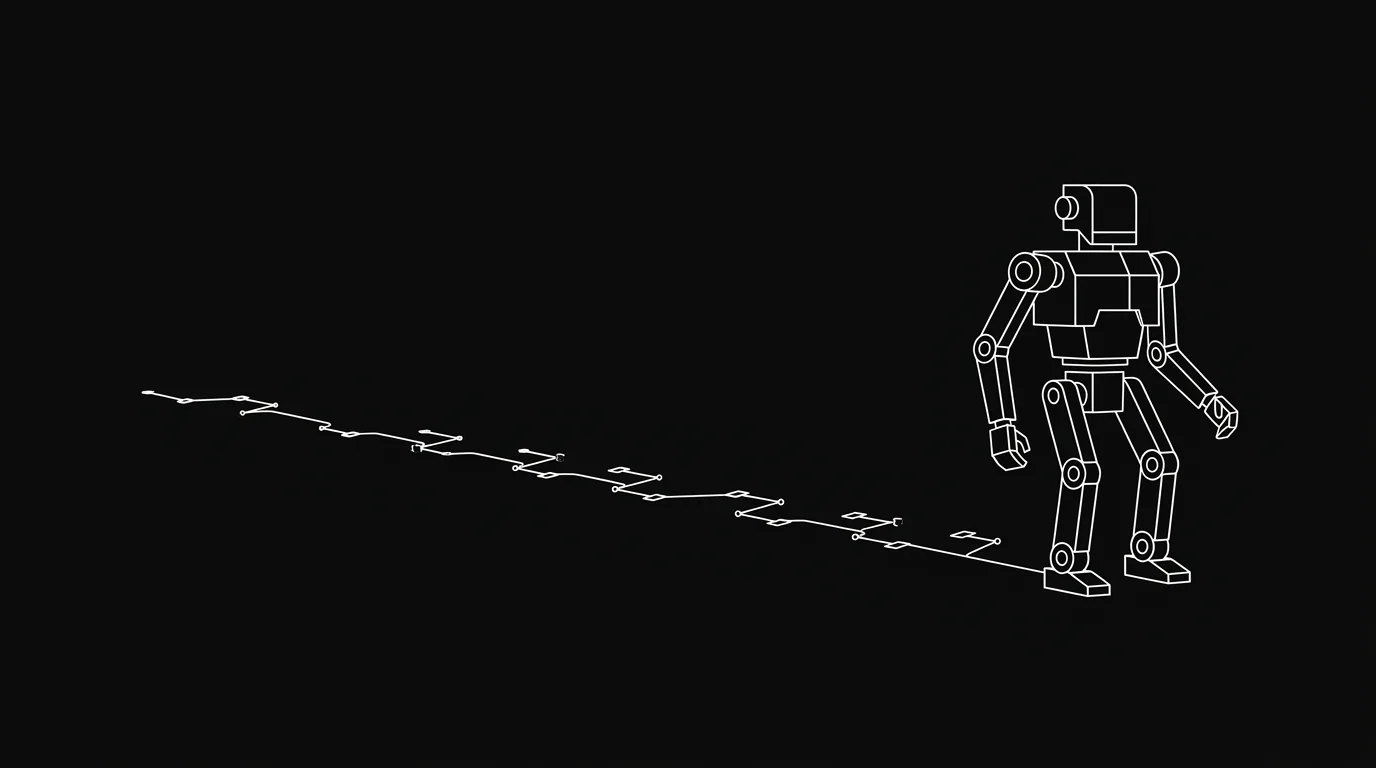
At 2am your Claude Code agent refactored the authentication module — tests pass, the PR is open. Come standup, someone asks what changed overnight. You know something happened, but the complete picture lives in a terminal session log nobody reads, a local file no one else sees, and a git commit with a message that says “refactor auth.” That is an AI work attribution problem: the work is real, the record is opaque, and the team is flying partly blind.
AI work attribution means knowing, after the fact, what an autonomous agent did, when it did it, and who assigned the task in the first place.
The Conventional View: Git Log Is Good Enough
The default answer most teams give is something like: “agents commit code, so the git history tells the story.” For developers using tools like Claude Code or Cursor to write and push code, this feels satisfying. The commit is there. The diff is there. What more do you need?
The same argument extends to task management: tickets get closed, PRs get merged, deployments go out. The outputs are visible. Isn’t that attribution?
It is attribution in the narrowest sense. But it falls apart the moment you need to answer any question beyond “did this change ship?”
Who assigned the task to the agent? Was there a review step, or did it go straight from generation to merge? Did the agent interpret the requirement correctly, or did it go off in a direction nobody intended? When a client reports a bug two weeks later, can you reconstruct what the agent was asked to do versus what it actually did?
Git answers the last question incompletely — at best. It says nothing about the first three.
Why This Is a Governance Problem, Not Just an Engineering Problem
The real issue isn’t technical. It is organisational.
Teams adopting AI agents are doing so faster than they are building the governance layer to support them. According to the 2024 Stack Overflow Developer Survey, 62% of developers are actively using AI tools in their work — yet only 12.2% are using AI tools for project planning, and just 13.2% for committing and reviewing code (Stack Overflow Developer Survey 2024). The tools are handling the work, but the project management layer hasn’t caught up.
This creates a specific failure mode. When a human does work, they naturally leave traces in the places your team already monitors: a ticket status changes, a comment thread gets updated, a standup mention happens. When an agent does the same work, none of those traces appear unless someone explicitly builds the bridge. The work lands in the codebase or in a document — but it doesn’t land on the board.
Teams running multiple AI agents consistently hit the same wall: they can see what was built, but they can’t reconstruct why, under whose authority, or in what sequence the decisions were made. You end up with outputs without context, which is the opposite of what accountability requires.
There is also a subtler cost. When humans can’t see agent work in the same place they see human work, they start to distrust the agents — not because the agents did bad work, but because invisible work feels uncontrollable. Attribution isn’t just about accountability after the fact. It’s about trust in real time.
What the Data Actually Shows
The 2024 Stack Overflow survey found that only 43% of developers trust AI output — with just 2.7% reporting high trust (Stack Overflow Developer Survey 2024). The trust gap is partially a quality problem, but it is also a visibility problem. You trust what you can inspect.
The gap between AI tool usage (62% active use) and AI-assisted project planning (12.2%) is telling. It suggests that most teams are using agents for execution while keeping oversight entirely manual. A developer runs an agent, gets an output, and then manually updates the board — if they remember, and if they have time.
That gap is where attribution breaks down. The manual update step is the link that snaps under pressure.
The parallel with human teams is useful here. Before async project management tools existed, teams relied on verbal updates and meeting notes. Work happened, but the record was fragmented. Tools like Jira, Linear, and Asana solved this by making the board the single source of truth — but only for human workers.
Now the same fragmentation is returning, one layer up. Agent work is the new verbal update: it happens, people know vaguely that it happened, but the record lives somewhere inconvenient.
The Stanford HAI 2025 AI Index notes that AI systems now outperform humans in programming tasks under time constraints in some settings (Stanford HAI 2025 AI Index Report). Agents are becoming genuinely capable. The governance deficit will only grow as that capability increases.
The Better Approach: One Board, Every Owner
The fix is not a separate “AI audit log” bolted onto your existing tools. Separate logs create separate maintenance — another surface to check, another source of truth to reconcile. The work this creates for humans defeats much of what agents are supposed to save.
The better approach is to treat agents as first-class participants in your project management system. Same board as the humans. Same task ownership model. Same inbox for updates.
That inbox has to stay quiet enough to trust. Attribution that generates an alert for every harmless status change just moves the cost of constant work notifications into a new system.
The practical safeguard is a project inbox-zero operating habit: agent updates should land in one clear queue, get classified, and leave only the decisions that need a human.
This means:
- Every task has an owner, whether human or agent. When you assign a task to an agent, that assignment is recorded in the same place you record human assignments. The board reflects reality.
- Agent updates flow into the board, not into a terminal. When an agent completes work, comments on progress, or flags a blocker, that information surfaces where the team is already looking — not in a log file that requires context-switching to find.
- The task history is the audit trail. Because every status change, comment, and output goes through the board, you can reconstruct the full sequence of events from a single ticket view. No need to correlate across git, Slack, and a CLI session log.
- Agents onboard like team members. They get an identity on the board — not a generic “bot” label, but a named participant with a task history. That history is what makes accountability possible. See the complete guide to AI-agent project management for how this works end-to-end.
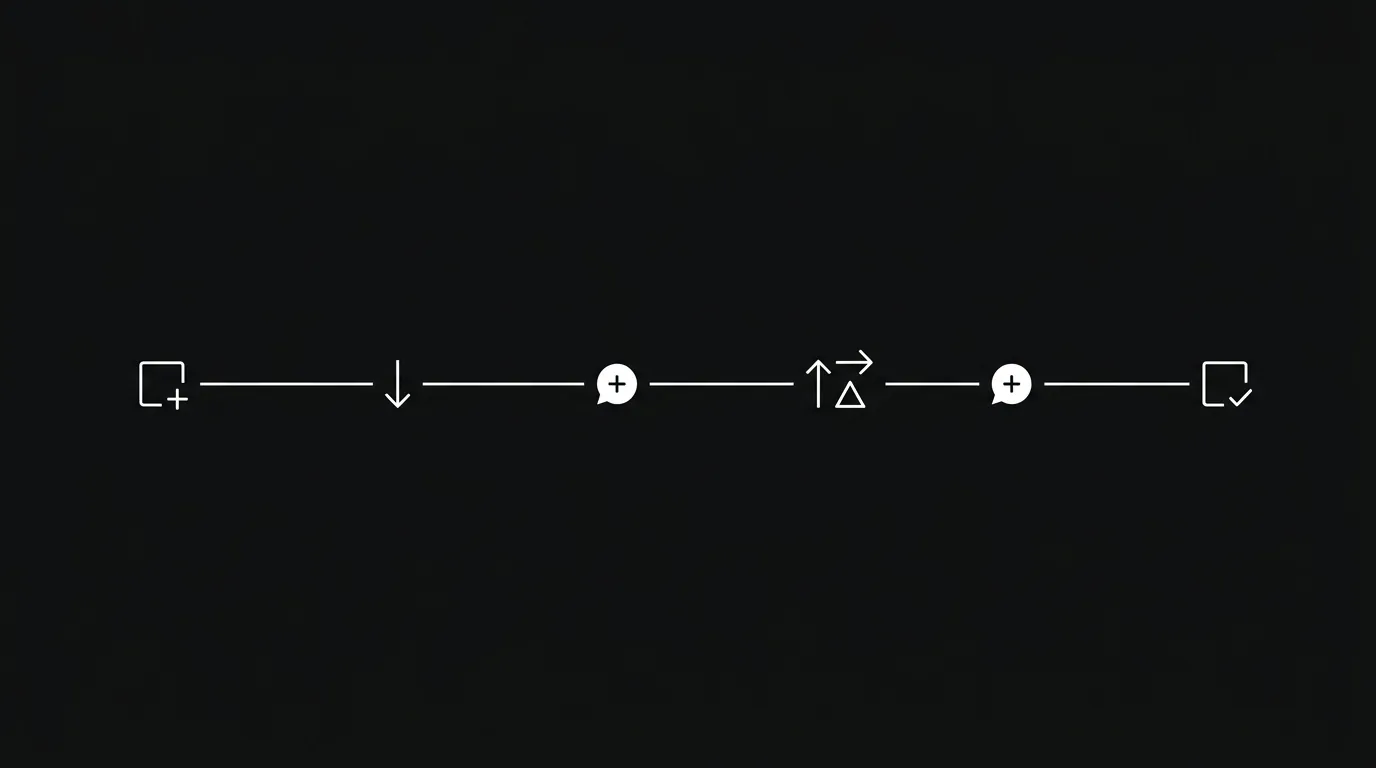
Hypertask’s agent management features are built on this model. The MCP integration and CLI access mean that agents running in your development environment — Claude Code, Cursor, or any tool that speaks the Model Context Protocol — can read and write the board directly. A task assigned to an agent appears on the board. When the agent finishes, the ticket moves. The comment thread contains the agent’s output. No manual bridge required.
For product development teams, this changes the standup question from “what happened overnight?” to a genuine overview: open the board, see what the agents worked on, read the comments, move to the next item.
Note that the access mode your agents use — CLI versus MCP — has implications for what they can attribute back to the board. CLI vs MCP — the access-mode decision affects attribution too.
The Honest Caveat: Attribution Doesn’t Solve Everything
Making agent work visible on the board doesn’t automatically make it good work. You can have a perfect attribution record and still have an agent that misunderstood the requirement, made a decision it shouldn’t have made autonomously, or produced output that required significant rework.
Attribution is not a substitute for review. It is the precondition for review. You cannot review work you cannot find.
There are also genuine edge cases where the shared-board model adds friction rather than removing it. If an agent is running exploratory loops — generating and discarding dozens of attempts before converging on a solution — logging every iteration clutters the board without adding useful signal. Good tooling needs a way to distinguish durable task records from ephemeral agent steps.
This is an open design problem. The point is not that attribution is solved — it is that most teams haven’t started solving it, because they haven’t named the problem yet.
How to Apply This to Your Team
If you are running AI agents today, start with a simple audit: pick five things your agents did in the last week. Can you answer these four questions for each one?
- Who assigned this task, and when?
- What did the agent do, in its own words?
- Was there a human review step before the output was accepted?
- If something went wrong, where would you look first?
If you can answer all four from a single view, your attribution is in reasonable shape. If you are opening four different tools to reconstruct the answers, you have a fragmentation problem.
The practical starting point: bring agents onto your board as participants, not just as tool calls in a terminal. That single change — giving the agent a task to own rather than a command to execute — is what creates the record.
Start free with Hypertask and onboard your first agent in under ten minutes. If you’d rather see it live, book a demo — the setup takes less time than your next standup.
Frequently Asked Questions
What is AI work attribution in project management?
AI work attribution is the practice of recording what an autonomous AI agent did, under whose authority, and when — using the same task-management system you use for human work. It creates a traceable history of agent activity that teams can audit, review, and act on without switching to separate log files or terminal sessions.
Why can’t teams just use git history to track what AI agents did?
Git records the output — the code change — but not the assignment, the intent, or the decision chain. It doesn’t show who asked the agent to do the work, whether the task was reviewed before it was merged, or what the agent reported back along the way. When something goes wrong, git tells you what changed; it doesn’t tell you why, or who authorised it.
Does AI work attribution require building a custom integration?
Not with tools designed around a shared-board model. Hypertask’s MCP and CLI interfaces let agents read and write the project board directly, so attribution is automatic: any agent that completes a task via MCP or CLI leaves a ticket history, comment trail, and status update without extra instrumentation. For teams already using Claude Code or MCP-compatible agents, the setup time is minimal.
How is this different from an AI observability or monitoring tool?
Observability tools (LangSmith, Langfuse, and similar) track model inputs, outputs, latencies, and costs at the inference layer. That is valuable for debugging AI behaviour. AI work attribution is a different layer: it tracks what task was assigned, who owns it, and how it fits into the team’s project board. Both can coexist — observability tells you what the model did at the technical level; attribution tells you what the agent did at the organisational level.
What happens to attribution when an agent runs long autonomous loops?
This is an open challenge. The practical approach is to attribute at the task level, not the step level. An agent might run 40 sub-steps to complete a single ticket — the board records the ticket assignment and the final output, not every intermediate step. This keeps the board readable while preserving the essential record.
The Bottom Line
- AI work attribution is not an edge case. If your team uses AI agents for any meaningful work, you already have an attribution gap — most teams just haven’t named it yet.
- Git history is insufficient. Code output is visible; task assignment, intent, and decision chain are not. Attribution requires the full context, not just the diff.
- The fix is structural, not a bolt-on. Adding a separate AI log creates a second maintenance surface. Bringing agents onto the same board as humans — with owned tasks, comments, and status updates — closes the gap by design.
- Only 12.2% of developers are using AI tools for project planning (Stack Overflow 2024), which means the board is where the attribution gap is widest — and the most fixable.
- Visibility enables trust. Teams that can see what their agents did are more likely to give agents more autonomy — which is the direction this is all heading anyway.